
Can you tell us a bit about your background and the formation of your artistic vision?
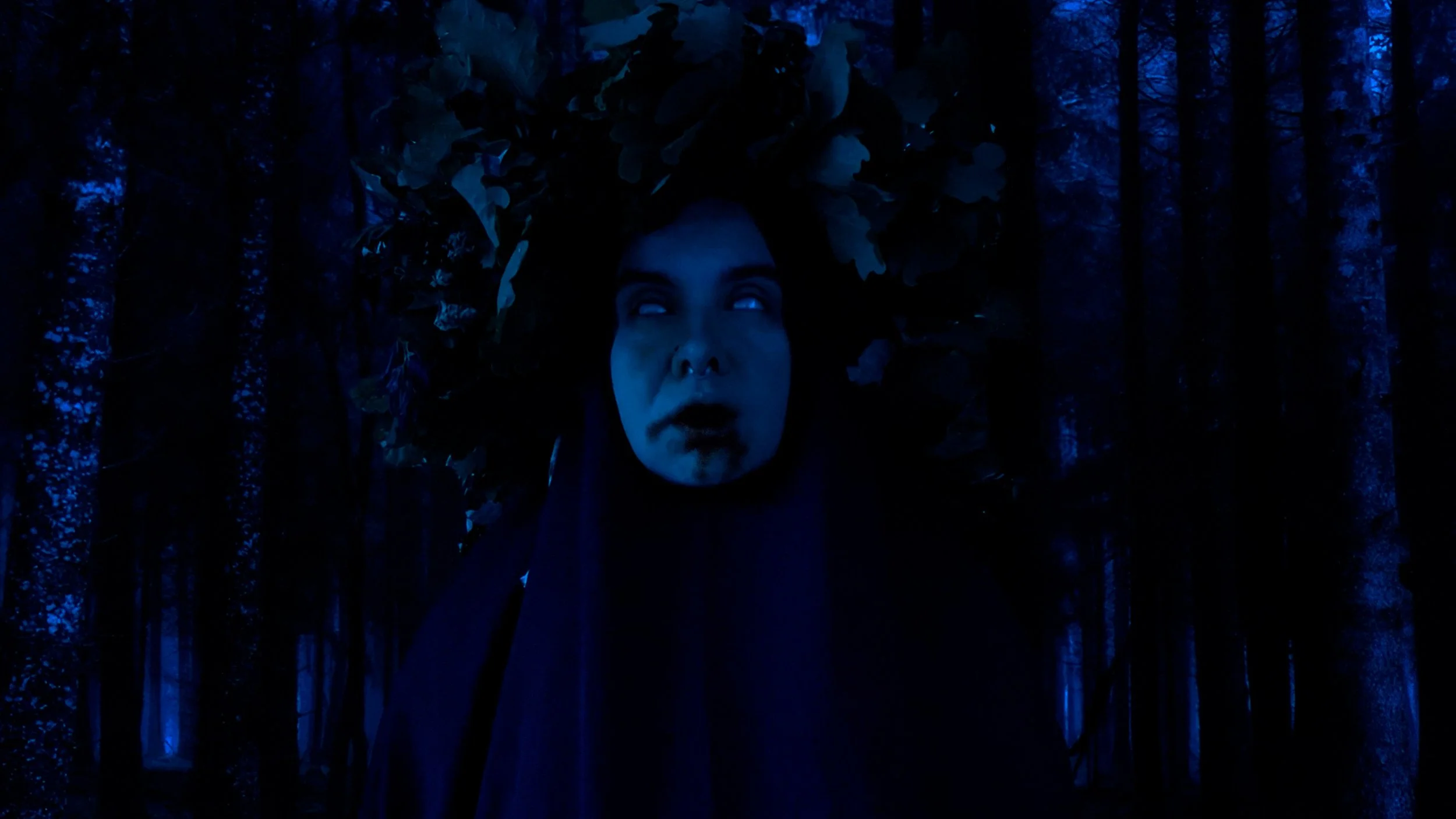
I have always found it difficult to talk about my background because of its inherent ambiguity. It is easier to imagine that my artistic vision is a strange inheritance from two ancestors: my great-great-grandfather, an Old Believer priest-heretic devoted to funeral rites, and my grandfather, a composer and keeper of folklore and forgotten traditions. Apparently, they never completed their earthly tasks and decided that someone in the family should carry this legacy forward. Yet, passing through generations, this noble message underwent many distortions and reached me in my earliest childhood in a bizarrely infernal form.
As is typical today, I have no formal artistic or musical education. My so-called title as Master of Spatial Arts and Humanities essentially corresponds only to an arts studies program. I dedicated eight years of my life to academic research, studying 20th-century sculpture and experimental bodily art practices. Despite my eventual disillusionment and departure from academia, this period shaped my conceptual apparatus - the very foundation that later allowed me to develop my own methodology.
I focused on the concept of ritual and began creating my own practices, while also adapting authentic ones to deconstruct my consciousness, body, and space. At the same time, I fully embraced improvisation as both a method and a research tool. This was followed by work on pseudo-narrative forms performed in an asemic oral non-language, and later numerous other experiments and stages. Each of these was significant to me, though there is little point in recounting all of them.
Yet the most valuable part of my background is my childhood. It was filled with phantasmagoric dreams, which are perhaps best described as primitive folk/body horror. Through them, the boundaries between reality and imagination were constantly shifting, giving rise to a terrifying metareality in which I dwelled. Living within it became one of the deepest transformative experiences of my life - and continues to influence me to this day. It was this state, at the age of 13–14, that inspired me to record my first music. My love for improvisation and non-language emerged from that experience. The circumstances and environment at the time compelled me to abandon these experiments for many years, turning it all into a chaotic journey through various genres and forms - which fortunately ended with a return to my original conceptual home.
You have mentioned mythology and Ancient Tragedy as strong factors in your work. Can you discuss your engagement with these influences?
Ancient Greek tragedy is, in essence, the crisis of classical mythology.
While myth does more than tell a story - it roots the human being within the cosmos, makes reality spiritually legible, and affirms the stability of meaning - tragedy exposes the limit of this order: the saving cosmic clarity no longer works, and transcendence is reached through the affect of destruction. In this sense, myth and tragedy form two facets: the mythology of cosmos and the sacred text of chaos.
In my work, I take myth and push it to the state of ancient tragedy, because myth is neither an ideal nor an infallible form of sacred knowledge, nor an “authentic guarantee” of spirituality. It creates the illusion of a stable bond - a “vertical” between human and divine - but that bond is always a structural operation, not an ontological fact. The canonical rituals and practices that grow out of myth, their repetition and adherence, cannot provide “working keys” to spiritual life; they cannot guarantee transcendence. Nothing can.
This is precisely what ancient tragedy does: it destroys the illusion of guarantee. It reveals the individual confrontation with chaos, with emptiness, with the impossibility of knowing beforehand what lies “on the other side” of transformation. The spiritual becomes genuinely dangerous - because it can end in madness, illusion, or physical/metaphysical collapse. But this is not a negation of myth: tragedy does not dismantle myth, it takes it to the point where it ceases to function and opens the space beyond its boundary.
And importantly: I am not trying to annihilate the significance of myth in my practice. I love the mythologies of the world, I love tracing them back to protomyth, I engage in my own myth-making. I draw from them images, sounds, tensions, and meanings. But in my work, myth is not a system of supports - it is a body that must be pushed into a tragic state in order to become alive again.
What is your relationship with the moving image? How does it sit in relation to your work in music and other disciplines?
I should probably start by admitting that my film knowledge is extremely limited, and I watch movies quite rarely. I came to moving images in a rather crooked way: at the age of 14–15, I decided to accompany my music with video. My mother helped me get a job as a cleaner, and we took out a loan for my first camera - the most constructive and productive part of the whole story, haha. Technically and visually, my first attempts, of course, looked like complete shit. Subsequent experiments, including photography, were no more successful. All of this led me to think of myself as completely visually impotent.
Over time, I became fascinated with trash, snuff, retro pornography, and film expressionists. This pestilential cocktail pushed me to realize that my visual failures might actually have a misguided intent. Later, I saw the films of the necrorealist Evgeny Yufit and the early works of Zulawski, and finally understood: if in music I regularly work with affect and the unconscious, then in my visual experiments I, on the contrary, sought primitive semantics, imagery, and hyper-control.
Equally important, for a long time I perceived video as a secondary layer in relation to music - not as an autonomous storytelling mechanism. By this, I mean a sacred, ancient form of narrative. I did not see in their interaction a genuine storytelling potential, where video functions as a massive semiotic structure, like text, and music forms the metarhythm and ontological environment in which this semiotic form resides. That is, instead of a musical instrument in the hands and a sacred text on the lips, as with an ancient storyteller, I have the opportunity to enact my own metaphysical narrative through the audiovisual form, which under certain circumstances can become equivalent to its authentic archetype. Of course, this was only the tip of the iceberg.
It took me years of reflection on the principles of creating sacred space, awakening threshold corporeality, possibilities of improvisational narrative, adaptation of non-language, sacralization of personal myth-making, and much more. I initially explored all these concepts through music and experiments with my body and consciousness, and at some point they very organically gave rise to my moving images, which became a natural part of this unified organism.
Your work is frequently described as ritualistic and transformative. To what extent do you see the viewer as a participant in this process?
At first, it seemed to me that the viewer should not exist at all. And when I first decided to consciously publish my music, I spent several days lying in horror and tears under the blanket, because it felt as if I had destroyed and betrayed my work.
Then came another phase: the viewer became a side effect. When releasing albums and visual acts, I aimed more to document the existence of my own ritualization practice than to elicit anyone’s participation. This is not cynicism or arrogance: in my practices, there is a constant rotation of subject and object, followed by their annihilation. I study the ritual as both participant and initiator, but at the same time, the sacred space of the ritual “studies” me; at some point, the ritual must destroy my “self,” open a liminal state, disappear as a fixation, and give birth to a metaspacial reality. We exist in a mode of mutual transformation, and this is a very individual, enclosed experience, which I still share only with my friend and collaborator, Zura Makharadze.
I consciously do not seek to make this experience populous, because within the process I study the properties of my own boundaries and their dissolution at the initiated Point, which expands and transitions from a state of cosmos to chaos. That is why I rarely appear on stage as a musician: the presence of an observer and their expectations unsettles me, since I cannot take responsibility for them - and in my case, doing so would be meaningless. An independent, non-commercial viewer - and it is precisely such a viewer who comes to me - possesses their own system of perception and an individual will to know. These structures are autonomous and cannot be controlled externally. The concepts of “ritual” and “affect” are so cluttered with cultural stereotypes that mass consciousness reacts reflexively and reactively - with mysticism, esoteric trash. But all of this is useless in relation to the free viewer. Ritual art is not a technology of suggestion: it does not program or guarantee transformation. It merely opens space, but does not lead by the hand. Genuine experience arises only where the viewer’s internal perceptual structure is already ready to receive it, not because I activated some “ritual” symbol. Therefore, their experience remains radically individual and beyond manipulation.
However, my attitude toward the viewer has become positive over the years. The reason is that I have clearly separated the process from its fruits: music, bodily practices, visual acts - the closed part; the fruits - albums, videos, installations, etc. - I calmly release to the viewer and trust that they can handle them as they see fit.
Thus, the viewer’s participation within my practice remains passive, but outside these internal layers I am sincerely glad that someone watches, listens, and analyzes my work. It is still surprising and unusual for me. I communicate with these people; we often exchange thoughts and emotions - and this is extremely valuable to me.
Please tell us more about Zura Makharadze and your collaboration?
In our work within the visual space, there are two facets.
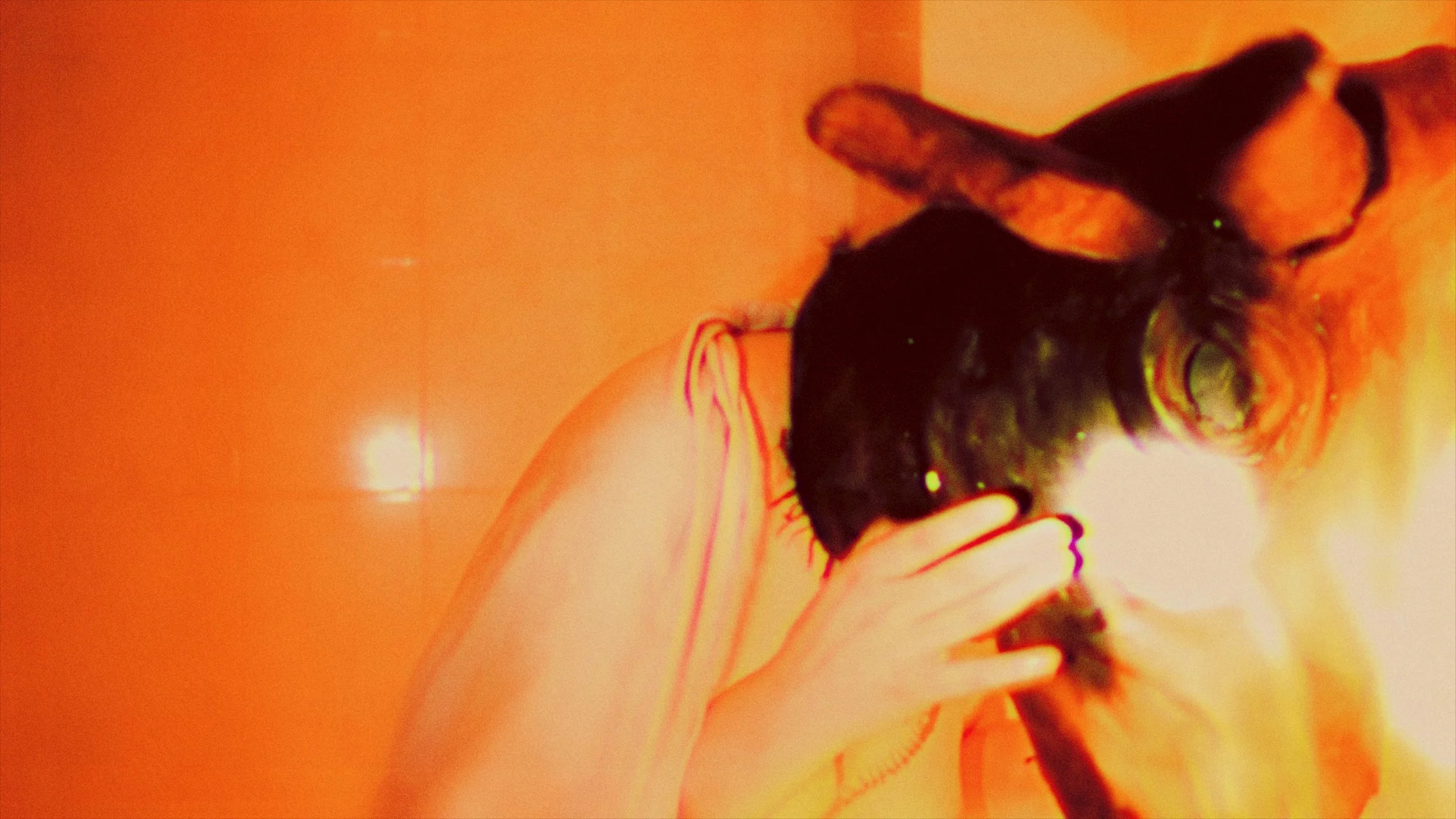
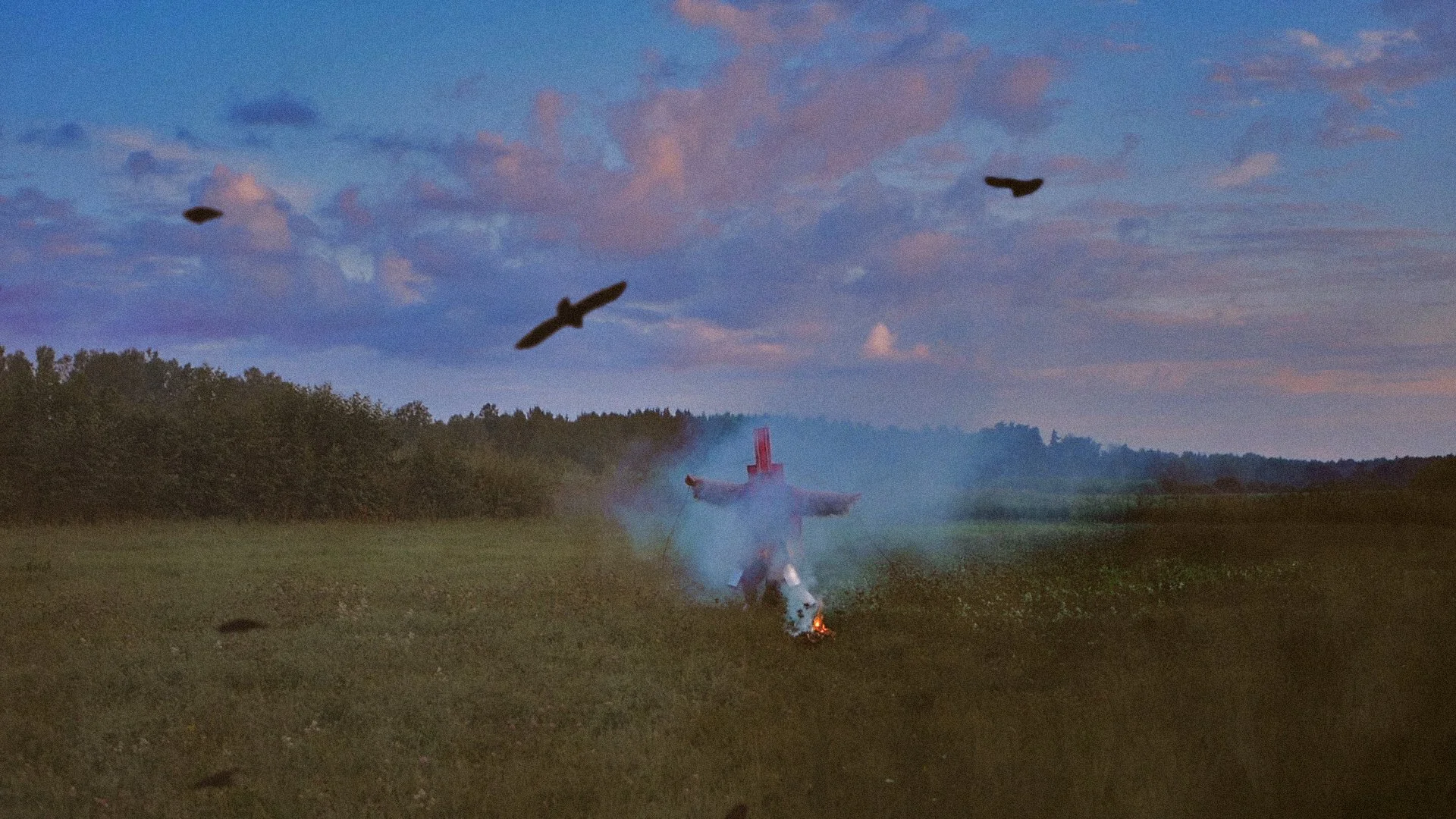
The first is total. For a long time, I carried a desire to experience my own act of “burning”- not metaphorically, but physically, though in a mythological dimension: not a call toward death, but a call toward purification. When I began filming Fuck My Black Holes, They Are Bottomless, I realized that if this fire didn’t touch me here and now, everything happening would lose its weight. I explained my intention to Zura, put on the Minotaur’s head, wrapped myself in wet cloth - and he, without a moment of hesitation, simply poured gin over me and set me on fire.
The second facet is anecdotal. While shooting The Sun Omophagous and His Children, it was Zura’s first experience with video art, and the first time he had to be naked in front of a camera. I warned him that a “fun” journey into madness was ahead. He calmly replied, “Do whatever you want with me - just make sure you take some great photos of my ass afterwards.”
Our music is built around these two poles. Zura is an experimental musician and percussionist from Georgia, working within ritualistic and avant-garde aesthetics. We met when he was twenty: at first he was my drum teacher, but the lessons gradually became a space of mutual improvisation. His playing sounded like a self-contained statement - as if the drums were speaking their own language. That’s a rare quality, especially in improvisation.
I immediately asked him to become my session drummer and had no plans to expand that role: I already had years of collaborative experience in which I openly shared my knowledge and methods, and, unfortunately, it ended very unpleasantly for me - partly because of the mishandling and superficial handling of my ideas.
But life unfolded differently. Thanks to Zura’s courage, we became the unusual union we are now. Despite his impressive academic musical background, he wasn’t afraid to rethink his experience in working with our music and approached me with attentiveness, understanding, and love - giving me the space needed for trust to form.
It is just as interesting for me to watch his independent work. I’m currently helping him record his second solo album, and his music is, for me, a truly magical experience: singular, profound, and unlike anything else.
Can you tell us about the specific processes of making your films - how do the ideas behind them reach a point when you know that they must take the form of a film?
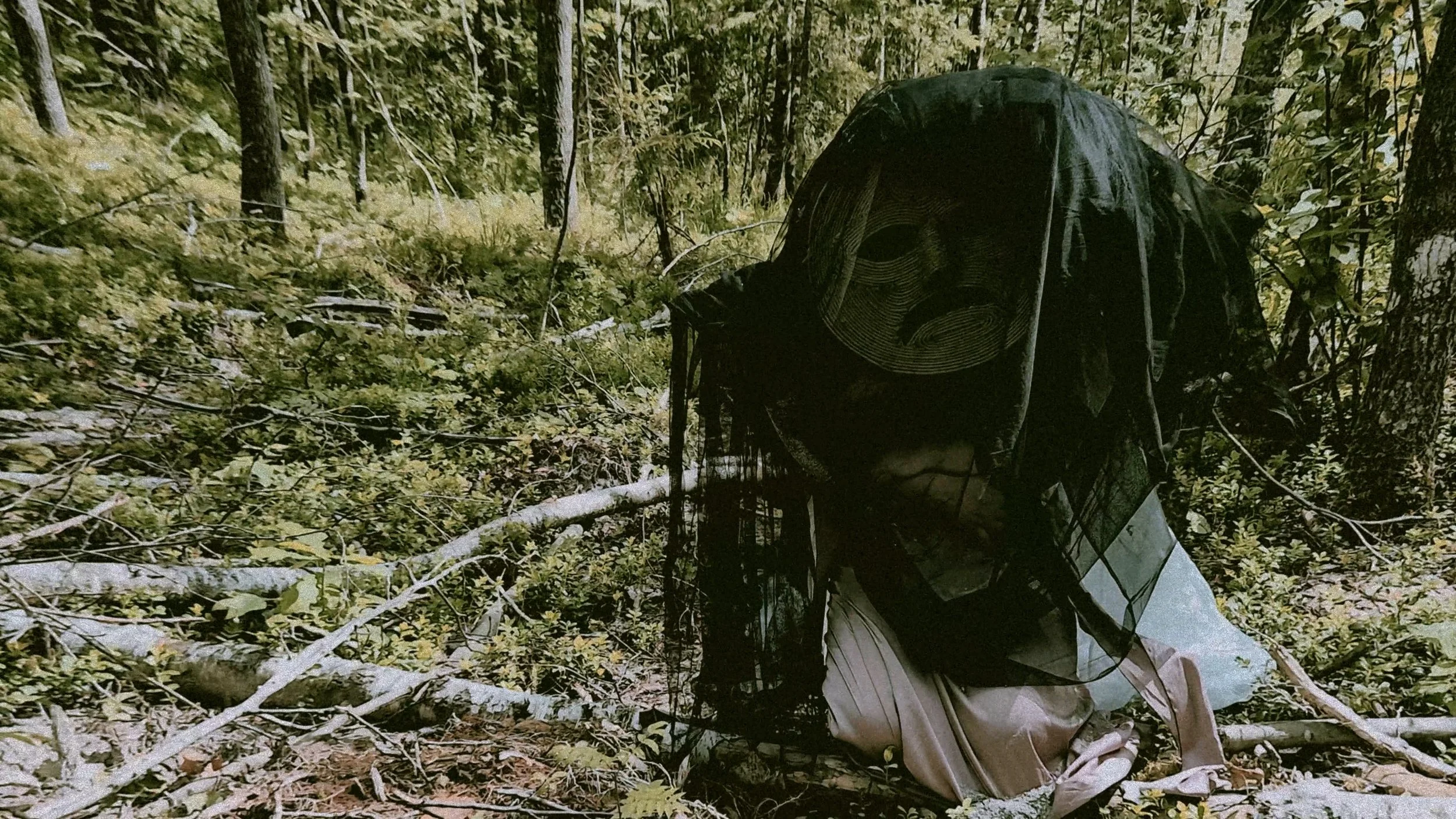
The initiation of filming, for me, is a very free process. Everything begins with establishing the Point — the launch of an hierotopy, when I create a sacred space. This Point can emerge from anything: an image, an object, a gesture, a fragment of space - even a piece of shit on the asphalt. What matters is not what it is, but the tension I introduce and the expansion of my “self” until the “zero object” becomes sacred. From that moment, the film begins to take shape.
Are the locations a determining factor in what you shoot?
I have places I love and return to, but today a location in itself determines nothing. In the period of my life when place still held significance, I was working on a project called "Sacred Space". I was filming the process of creating and installing an altar with idols - guardians of the memory of a specific location. But I was kicked out from there, so I installed the altar in an abandoned trash-filled house where homeless people lived among dunes of clothes mixed with feces and garbage - and I placed everything directly on top of that. And this situation made me understand something important: the metaphysics and mythology of a place are brought there by my consciousness. Every sacred place, object, or word was once a “zero object” that became sacred solely through individual effort. Only afterward does cultural memory arise, collective tremor, and the stereotype of “the sacred.”
To what extent are the structures of your films pre-planned or decided on in shooting or editing?
The imitation of a narrative is constructed during editing and becomes fixed only by the written text that describes the film (my least favorite part, which I execute as superficially as possible). During filming, there is no predefined structure: it is a spontaneously emerging pattern of images and states, which I sketch on paper, but the form is always resolved in the moment.
What are the conditions of shooting some of the very intense scenes that you create?
This is the hardest question, because within my practice I don’t perceive scenes as intense. For me, the tension is the methodological work itself - the constant maintaining of the state - not isolated moments.
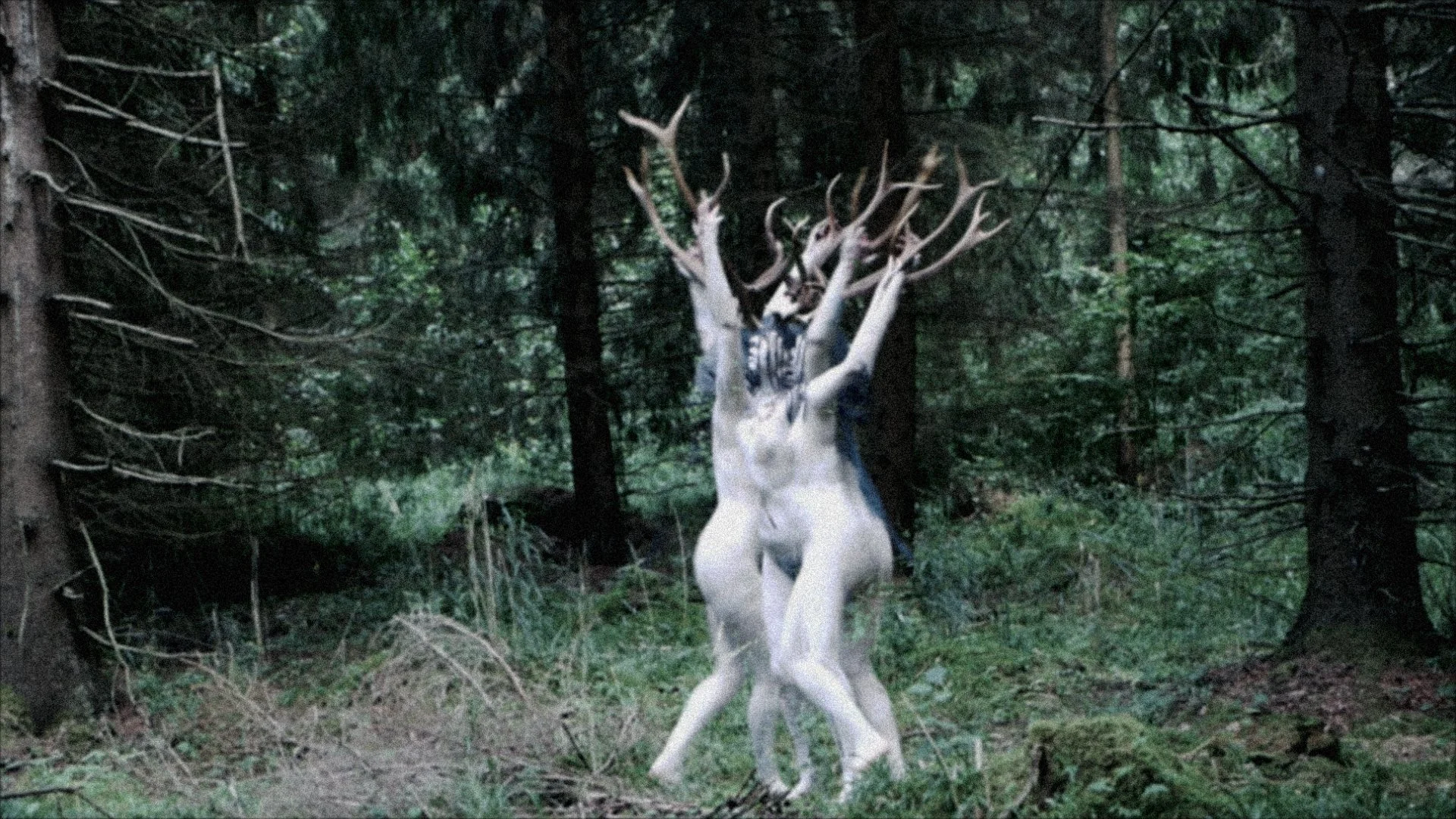
Although, of course, troubling situations do happen. I remember a scene from Uzdrawianie (Healing): I was naked, painted white, wearing deer antlers, running through the forest during berry-and-mushroom season. On one side were solitary mushroom pickers with knives; on the other, Roma families gathering blueberries; and between them - me, sprinting around in a trance, occasionally screaming like an animal… That was probably an intense scene - for all of us, ha-ha.